
More Nutrition, Less Methane with Claire Loudis of Lotus Foods
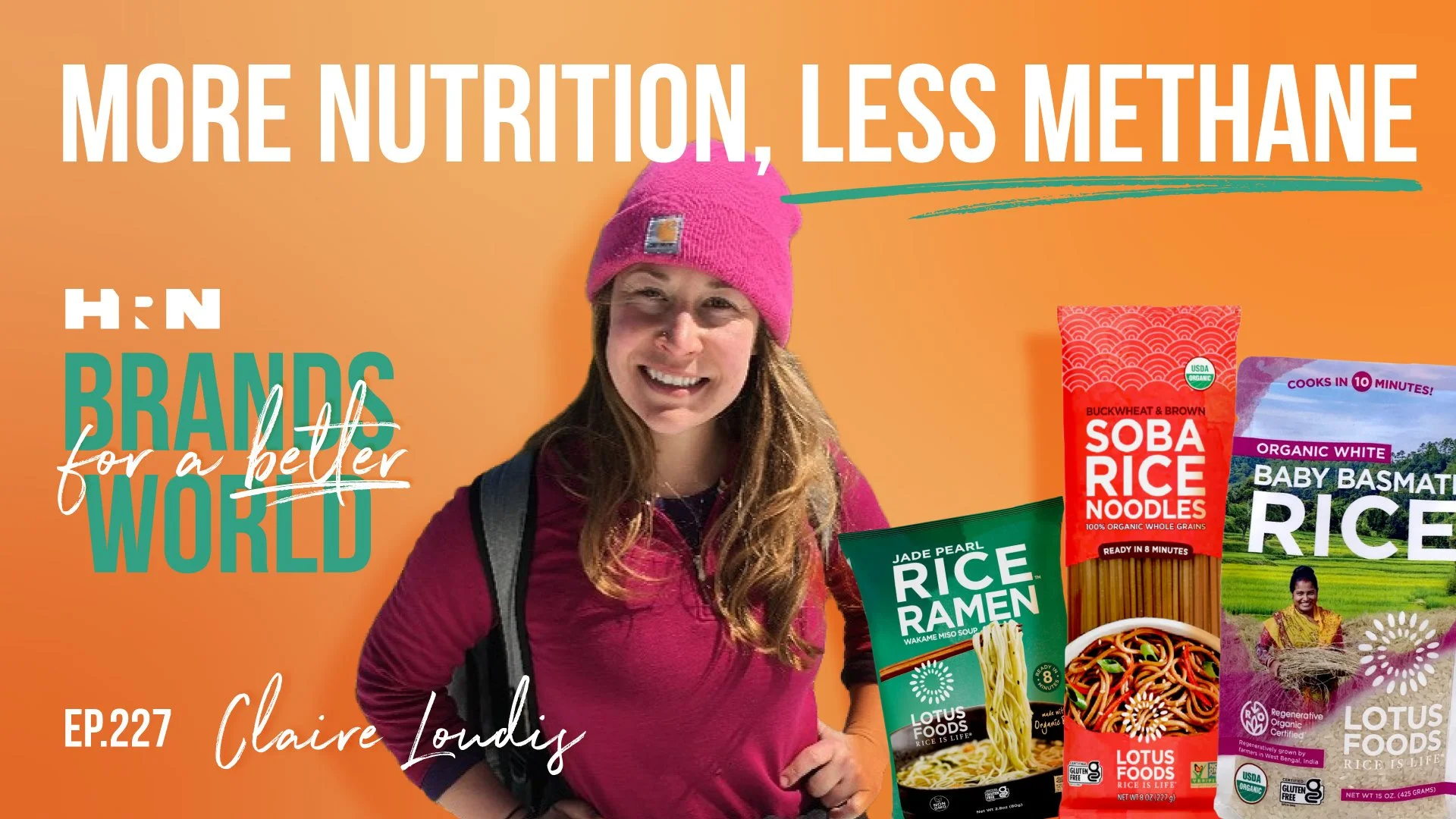
Claire Loudis shares rice’s impact on water, climate, and farmer livelihoods, and why Lotus Foods decided to change how rice is grown around the world. We talk about the many benefits of heirloom varietals and the System of Rice Intensification (SRI) method they’re scaling to grow more rice with less water and lower methane emissions. Claire then shares details on the nature-based practices that go into growing their Regenerative Organic Certified ® (ROC) Basmati Rice, the brand’s commitment to seed sovereignty, and the biggest challenges she sees the food industry facing in the coming years.
Key Topics
The water and climate impacts of rice
Heirloom rice and its benefits
The System of Rice Intensification (SRI) that results in More Crop Per Drop ®
Regenerative agriculture practices in rice farming
Launch of the first ROC Basmati Rice in 2020
Seed sovereignty and biodiversity conservation
Challenges the food industry is facing
Sound Bites
“Rice is one of the highest emitting crops, after meat and eggs.”
“Heirloom varieties often have better nutrition, flavor, and genetic diversity, so they're naturally hardier, locally adapted, and more resilient to climate disruptions making them a natural fit for regenerative and organic farming practices.”
“Ultimately this pilot is to figure out what works, what we can scale, gauge farmer reception, measure yields of course, return on investment for those farmers, and to work to understand how these practices impact our farmers on the ground, the people actually growing rice.”
“Over 75% of plant genetic diversity has been permanently lost.”
“The farmer is a key piece of hope for me. Their whole job is managing uncertainty and while climate change has made that harder, they remain one of the most innovative and resilient groups of people I know. They're tinkers at heart and always adapting. So I am energized and hopeful because of those people I've met.”
Links